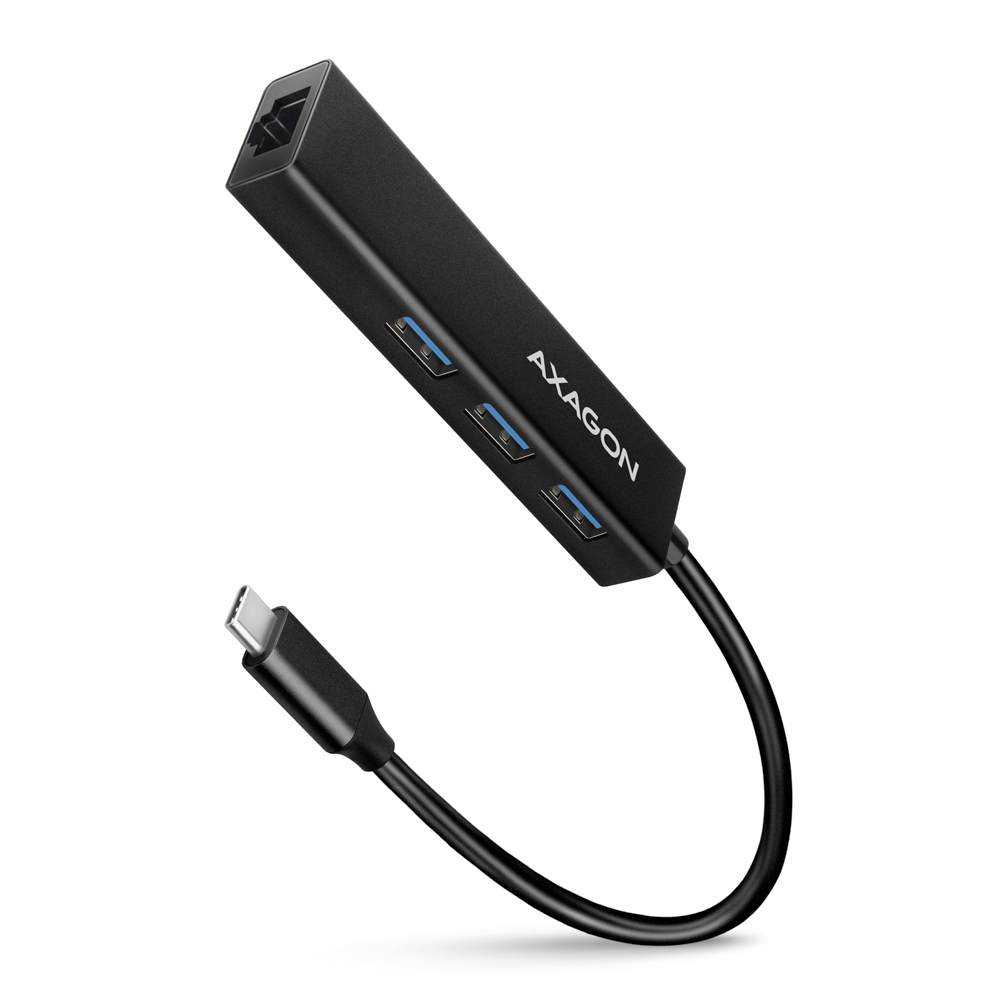
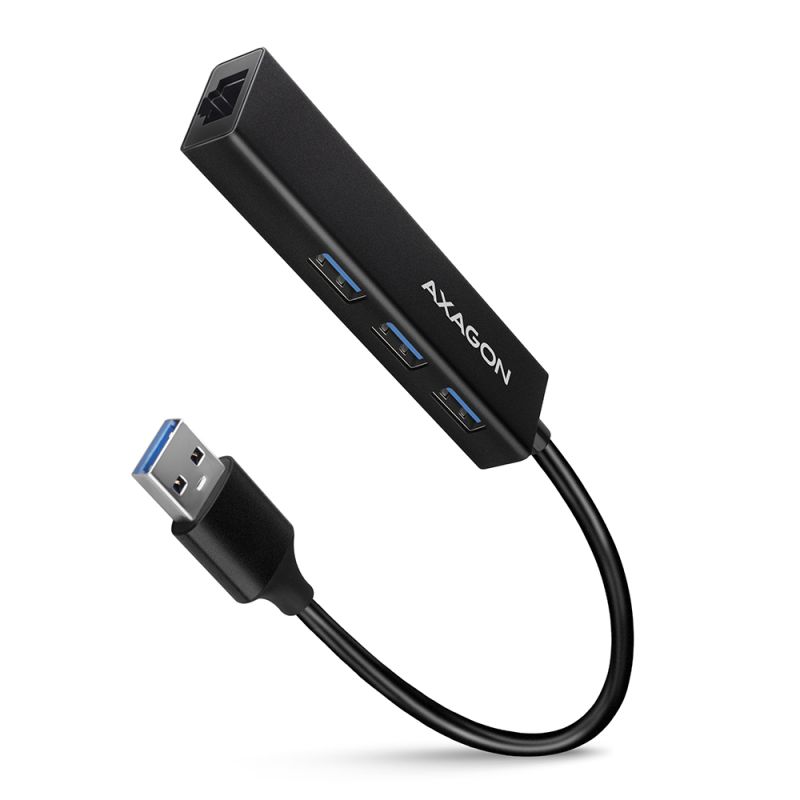
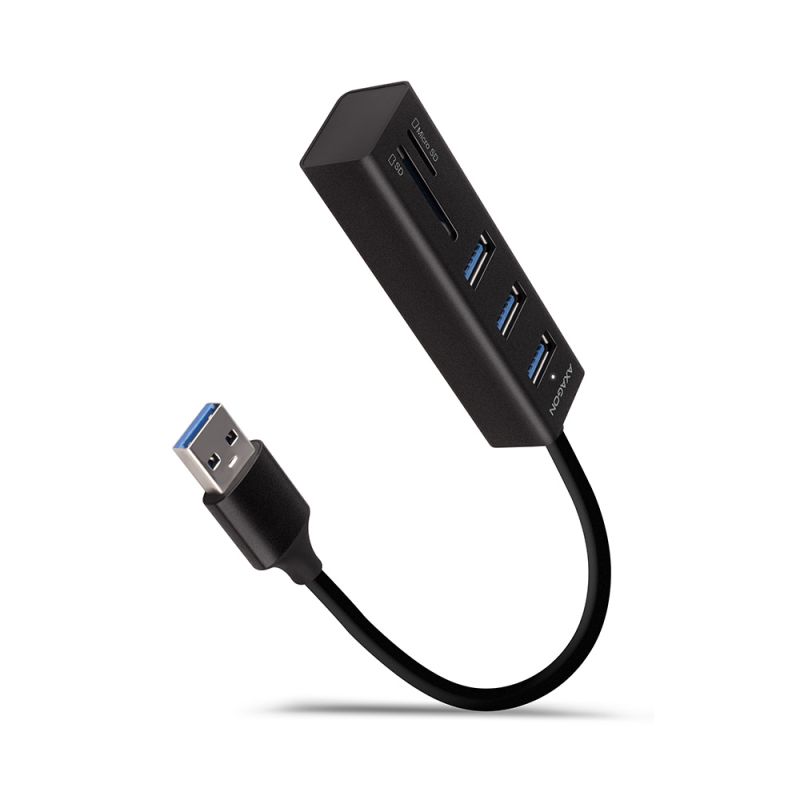
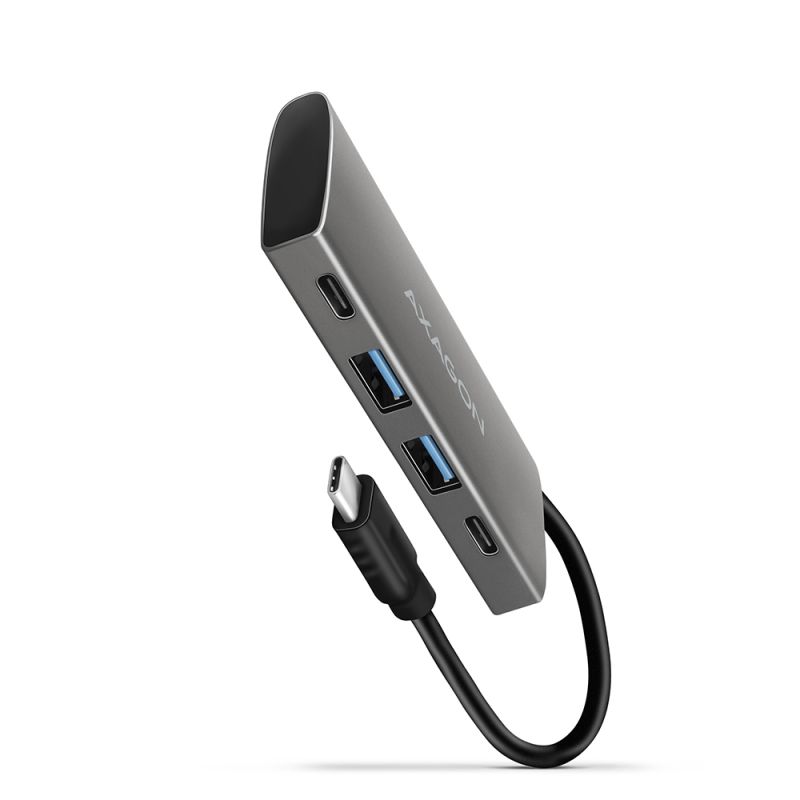
AXAGON HMC-GL3A hub multi-port USB-C 3.2 Gen 1 (USB 3.0) en métal mince non seulement connecte jusqu’à trois appareils USB simultanément à un ordinateur portable ou un PC, mais ajoute également une carte réseau gigabit qui connecte votre ordinateur à un réseau à haute vitesse.
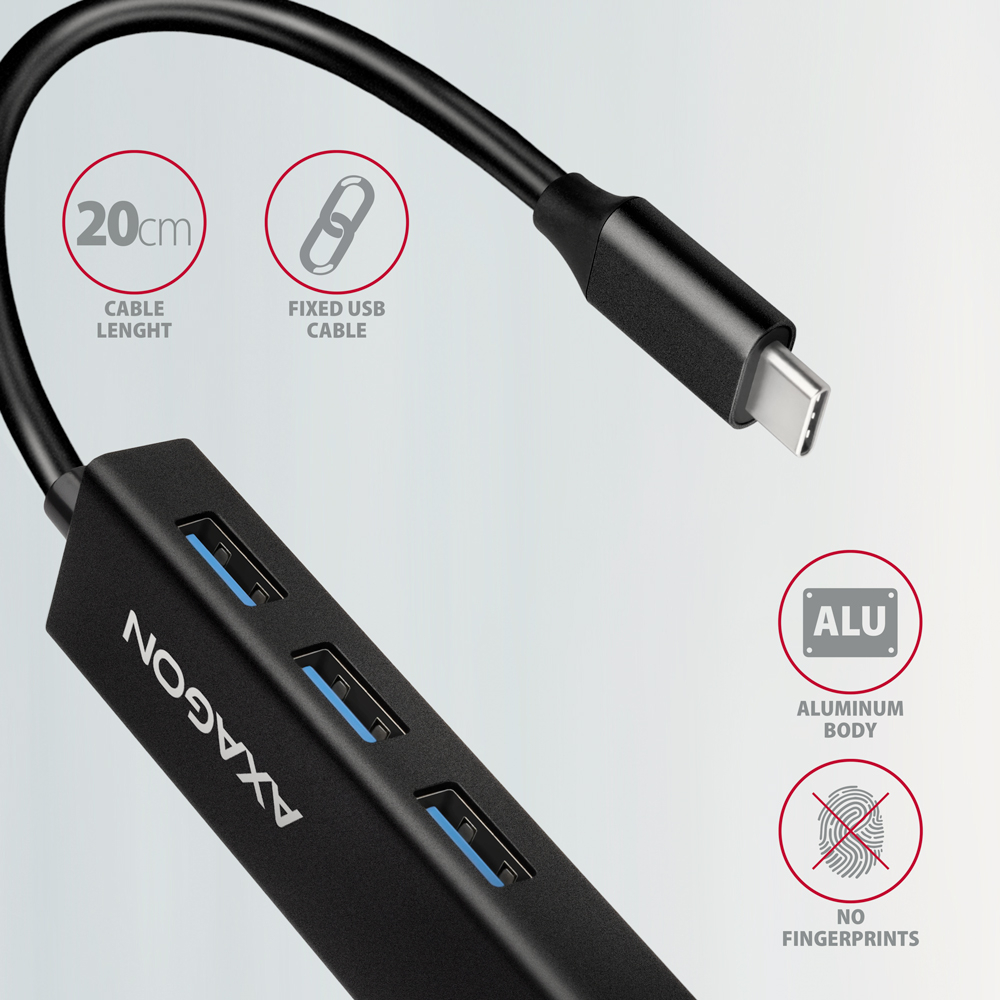
Le boîtier en métal du hub est fait d’aluminium, assurant une protection mécanique parfaite pour un transport fréquent. Sa surface élégante et légèrement structurée empêche les traces de doigts indésirables. Le câble USB fixé de 20 cm est idéal pour les utilisateurs d’appareils mobiles.
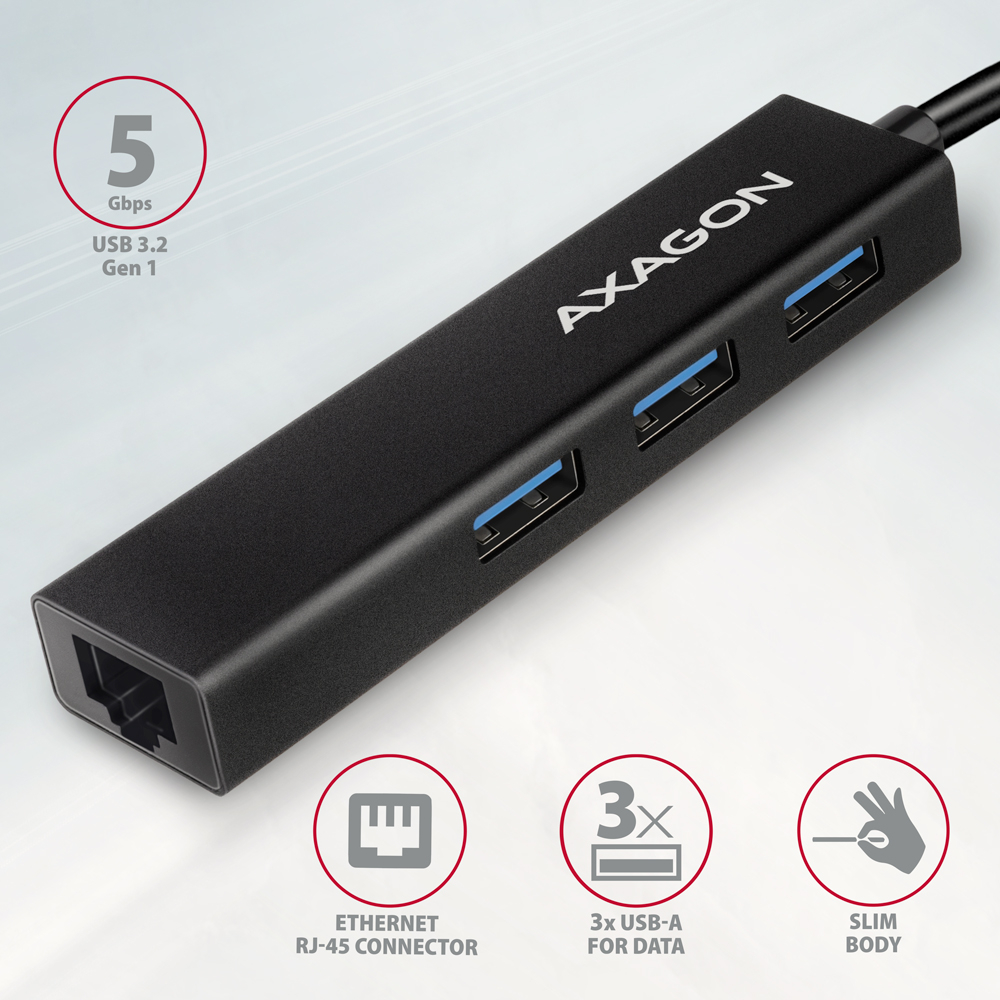
Ce hub multi-port compact peut également gérer la connexion permanente de plusieurs disques externes. Grâce à l’interface USB 3.2 Gen 1 rapide, la vitesse de transfert peut atteindre jusqu’à 5 Gbit/s.
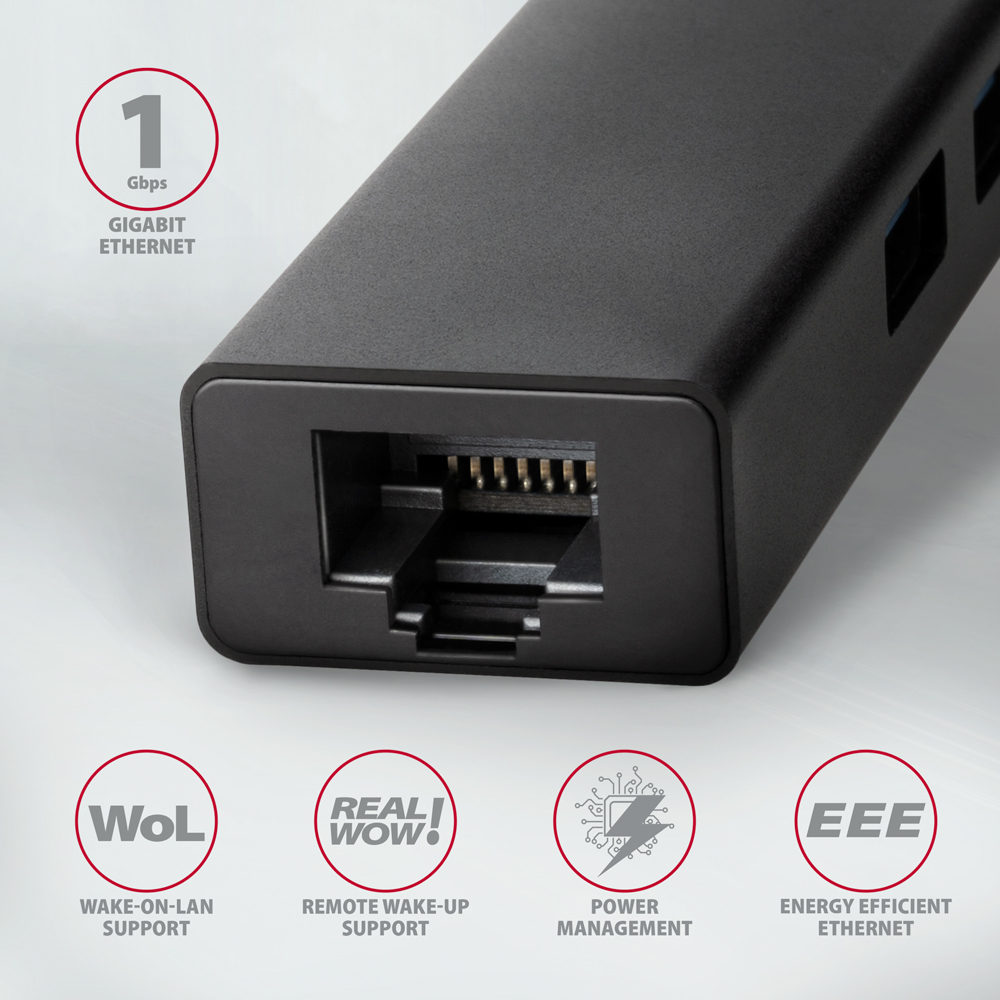
La carte réseau étend l’ordinateur avec une connexion réseau rapide et stable, remplit la fonction d’un connecteur réseau RJ-45 manquant, ou ajoute une carte réseau supplémentaire. L’adaptateur LAN est compatible avec des vitesses de 10/100/1000 Mbit/s et offre également une large gamme de fonctionnalités telles que le checksum IPv4/IPv6 pour réduire la charge CPU des sommes de contrôle, la détection et l’autocorrection crossover, la prise en charge de divers modes Wake-on-LAN, la gestion VLAN, ou les fonctions avancées de gestion de l’alimentation. Dans les systèmes d’exploitation modernes, à partir de Windows 8.1, l’adaptateur permet une installation automatique facile sans connexion Internet requise.
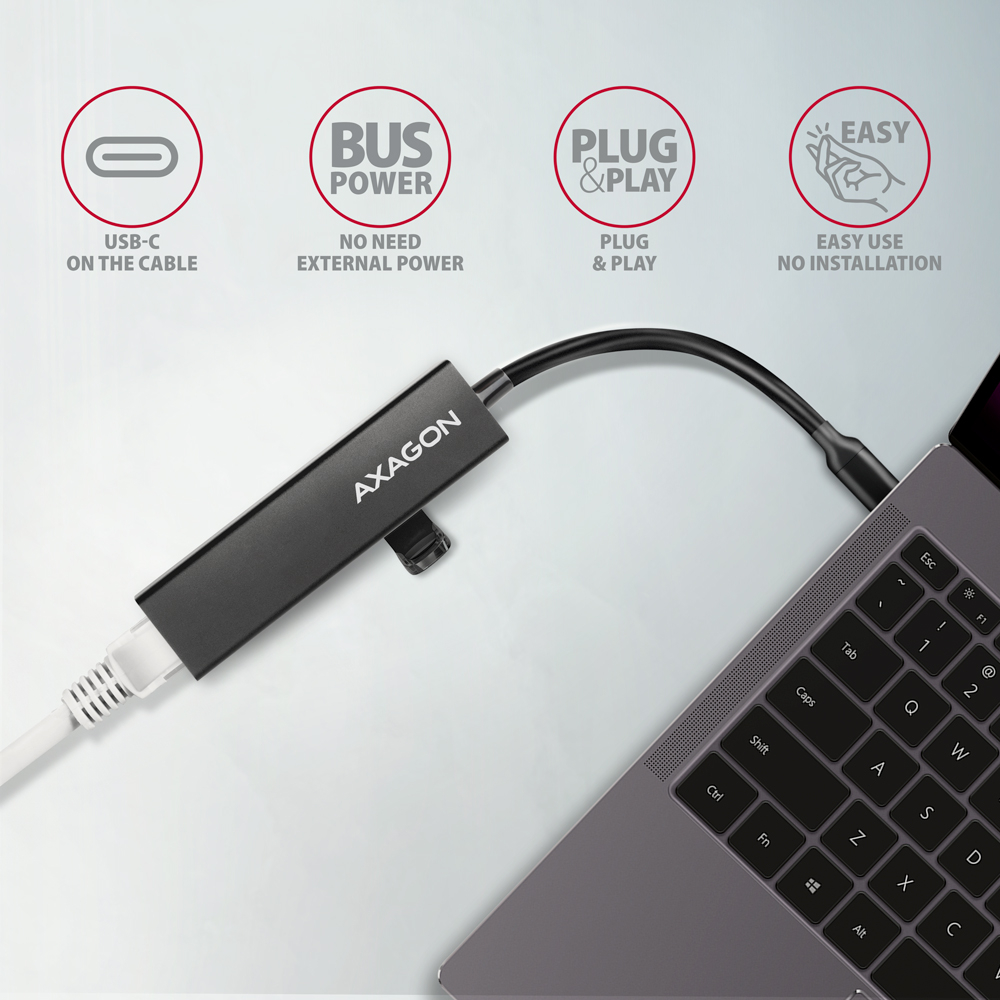
Le hub USB est un complément idéal pour les ultrabooks avec peu de ports USB-A et sans carte réseau. Le hub ne craint pas non plus la connexion avec des téléphones à connecteur USB-C. Par exemple, vous pouvez connecter une clé USB, un clavier et une souris à votre téléphone ou tablette. Certains téléphones et tablettes Android, comme le Samsung S9+, peuvent se connecter à un réseau Internet via câble réseau grâce à ce hub.
Entrée :
• 1× port USB 3.2 Gen 1 / SuperSpeed USB, connecteur USB-C male.
• Rétrocompatible avec USB 3.1 Gen 1 / USB 3.0 / USB 2.0 et USB 1.1.
• Connecteur USB de type C male fixé sur un câble de 20 cm.
Sorties USB :
• 3× port SuperSpeed USB, connecteurs USB-A female.
• Prise en charge des vitesses de transfert 5 000 / 480 / 12 / 1,5 Mbit/s (SuperSpeed / High / Full / Low speed).
• La bande passante totale / vitesse de transfert est déterminée par l’interface USB 3.2 Gen 1 utilisée (théoriquement 5 Gbit/s).
• Le hub USB gère la connexion simultanée de plusieurs disques externes.
Sortie RJ-45 :
• Interface Gigabit Ethernet avec connecteur RJ-45 pour connexion par câble UTP ou STP.
• Vitesses de transfert Ethernet prises en charge 10/100/1000 Mbit/s.
• Spécifications IEEE 802.3 10Base-T, IEEE 802.3u 100Base-TX, IEEE 802.3ab 1000Base-T prises en charge.
• Détection automatique 10/100/1000 Mbit/s.
• Prise en charge du moteur de déchargement de checksum paquet IPv4/IPv6 (COE) pour réduire la charge du processeur, incluant les vérifications et générations de checksum IPv4 IP/TCP/UDP/ICMP/IGMP & IPv6 TCP/UDP/ICMPv6.
• Prise en charge de TCP Large Send Offload V1 et V2.
• Prise en charge du codage et décodage des priorités couche 2 IEEE 802.1P.
• Prise en charge du tagging VLAN IEEE 802.1Q.
• Prise en charge IEEE 802.3az EEE (Energy Efficient Ethernet) - réduction de la consommation en veille.
• Prise en charge de Jumbo frame.
• Prise en charge des transmissions full-duplex avec contrôle de flux IEEE 802.3x et half-duplex avec contrôle de flux back-pressure.
• Prise en charge Auto MDI/MDIX - détection et autocorrection crossover éliminant le besoin de câbles crossover.
• Prise en charge du contrôle matériel Cyclic Redundancy Check (CRC) pour détecter les erreurs de transmission.
• Prise en charge de la correction de permutation/polarité/décalage des paires.
Fonctions Wake-on-LAN en différents modes :
• Prise en charge du mode veille et réveil à distance via Magic Packet, Microsoft Wakeup Frame, Microsoft Wake Packet Detection ainsi que Link Change wake-up.
• Prise en charge de la norme ECMA-393 proxZzzy® pour les hôtes en veille gérant la connexion réseau via serveurs proxy.
• Prise en charge de la technologie RealWoW! permettant le réveil à distance via Internet.
Fonctions avancées de gestion de l’alimentation :
L’adaptateur prend en charge une gestion avancée de l’alimentation réduisant les pertes en état de veille ou de faible activité réseau. Il prend également en charge des économies d’énergie avancées lors de la déconnexion du câble Ethernet.
• Prise en charge de l’Advanced Configuration Power management Interface (ACPI).
• Prise en charge du déchargement Power Management (ARP & NS).
• Prise en charge de Microsoft Always On Always Connected (AOAC).
• Prise en charge d’Intel Converged Platform Power Management (CPPM).
• Prise en charge du Link Power Management (LPM).
• Prise en charge de l’Operating System-directed Power Management (OSPM).
• Prise en charge IEEE 802.3az EEE (Energy Efficient Ethernet).
Autres caractéristiques :
• Possibilité de connexion à chaud grâce à la prise en charge du Hot Plug.
• Prise en charge complète Plug and Play.
• Prise en charge du mode économie d’énergie.
• Câble blindé de qualité garantissant une communication rapide et des interférences minimales.
• Prise en charge de l’alimentation via bus USB (bus power).
• Dimensions 90 × 23 × 13 mm.
• Poids 38 g (câble inclus).
• Longueur du câble USB 20 cm.
Systèmes d’exploitation pris en charge :
• MS Windows XP / Vista / 7 / 8 / 8.1 / 10 / 11 et ultérieur, Windows Server 2003 / 2008 / 2012 / 2016 et ultérieur (prend en charge toutes les versions 32 et 64 bits), Mac OS X 10.4.x et supérieur, Linux noyau 2.6.x et supérieur, Android versions majoritaires (ATTENTION - vérifier auprès du fabricant de l’appareil Android si la connexion Ethernet est prise en charge).
Contenu de l’emballage :
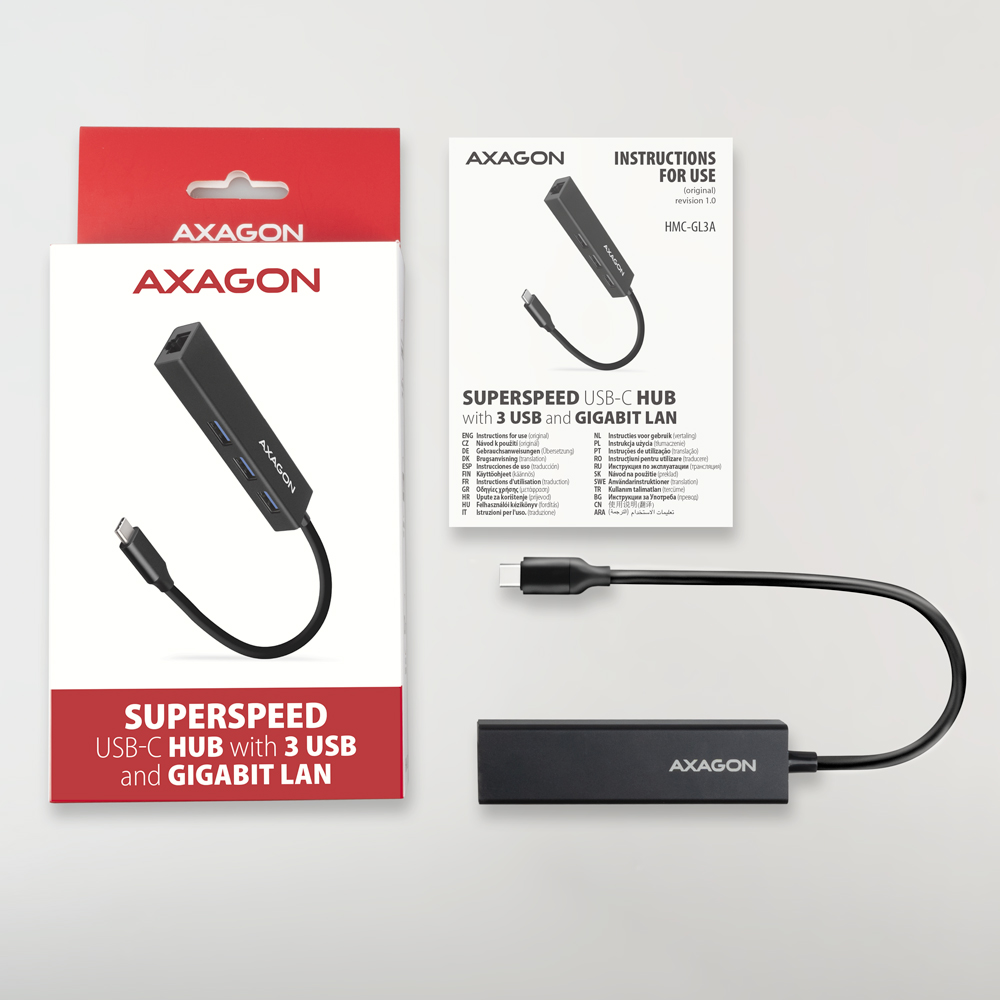
• Hub USB-C multi SuperSpeed avec câble fixé de 20 cm,
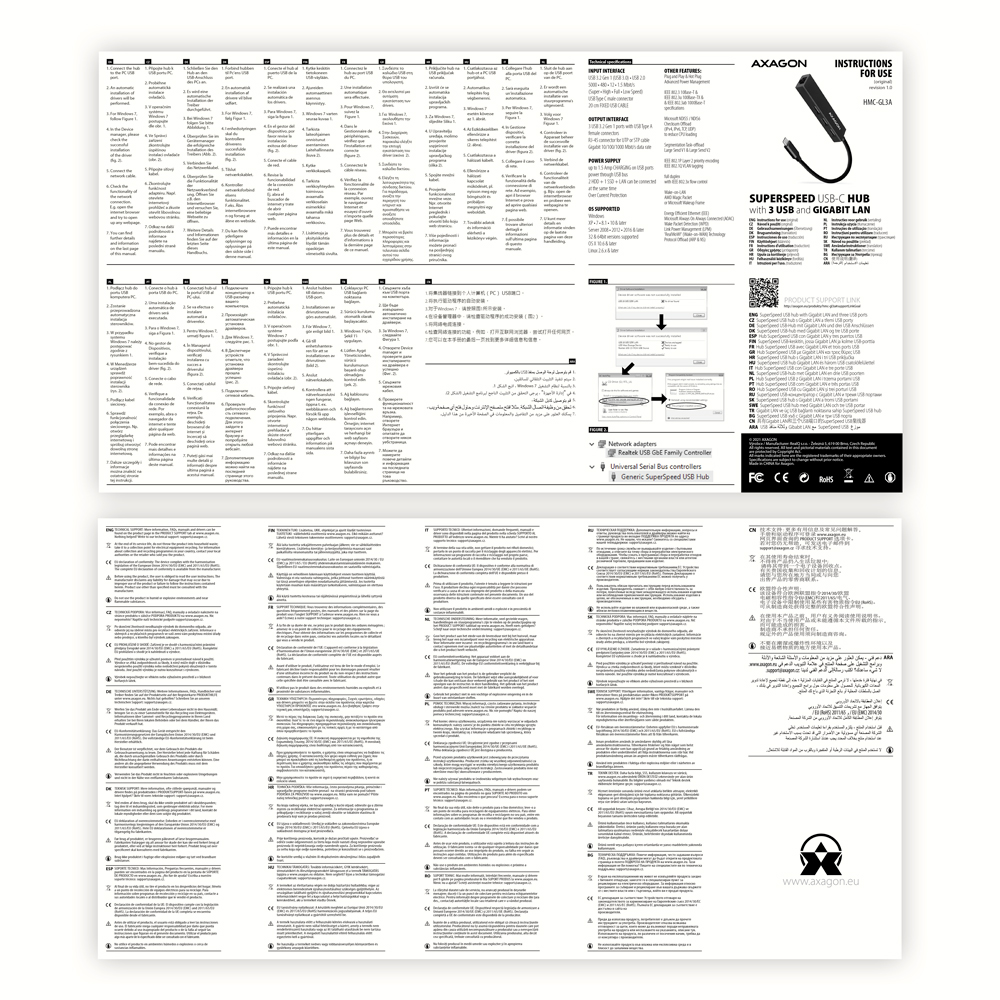
• manuel multilingue CZ / DE / DK / ENG / ESP / FIN / FR / GR / HR / HU / IT / NL / PL / PT / RO / RU / SK / SWE / TR / BG / CN / ARA,
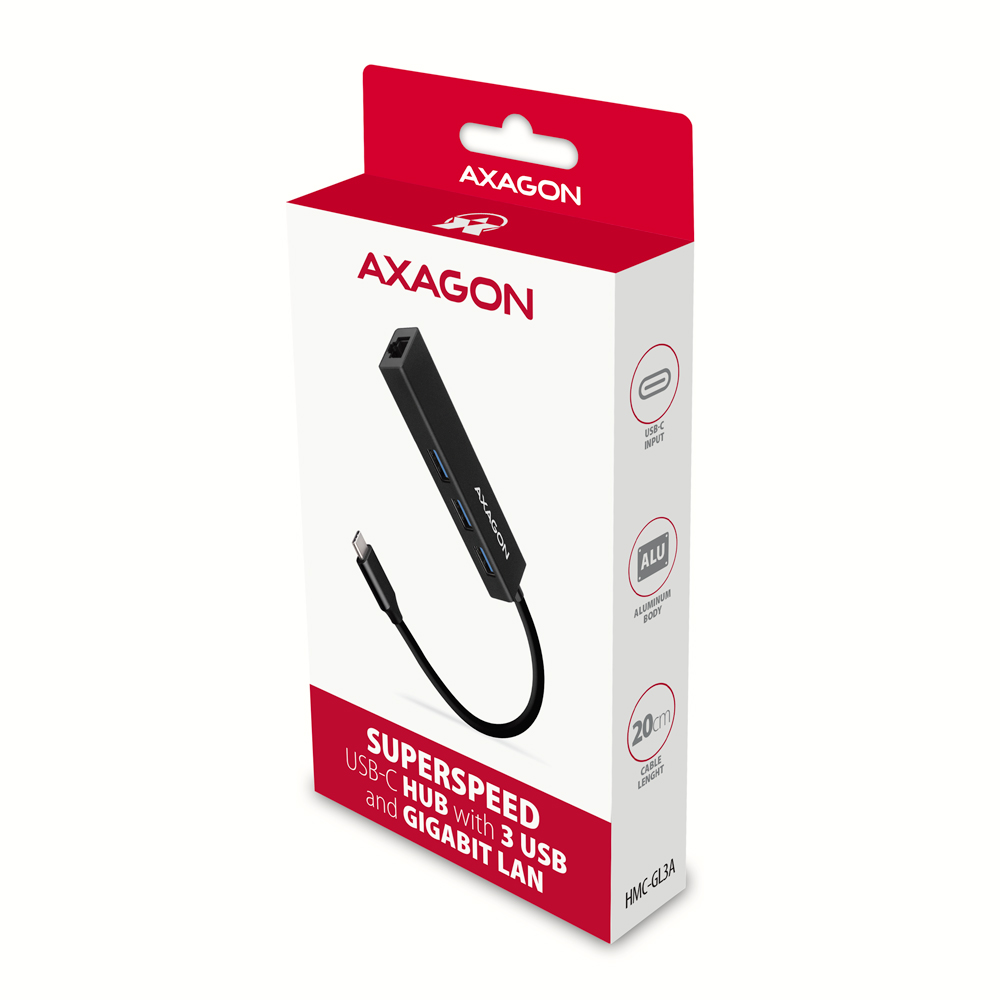
• emballé dans une boîte carton avec trou pour suspension.



 français
 tchèque
 slovaque
 anglais
 allemand
 hongrois
 polonais